
A viral post is not proof. Use the five-step PAUSE checklist to check who is giving health advice, what backs it, and where to verify it in India.
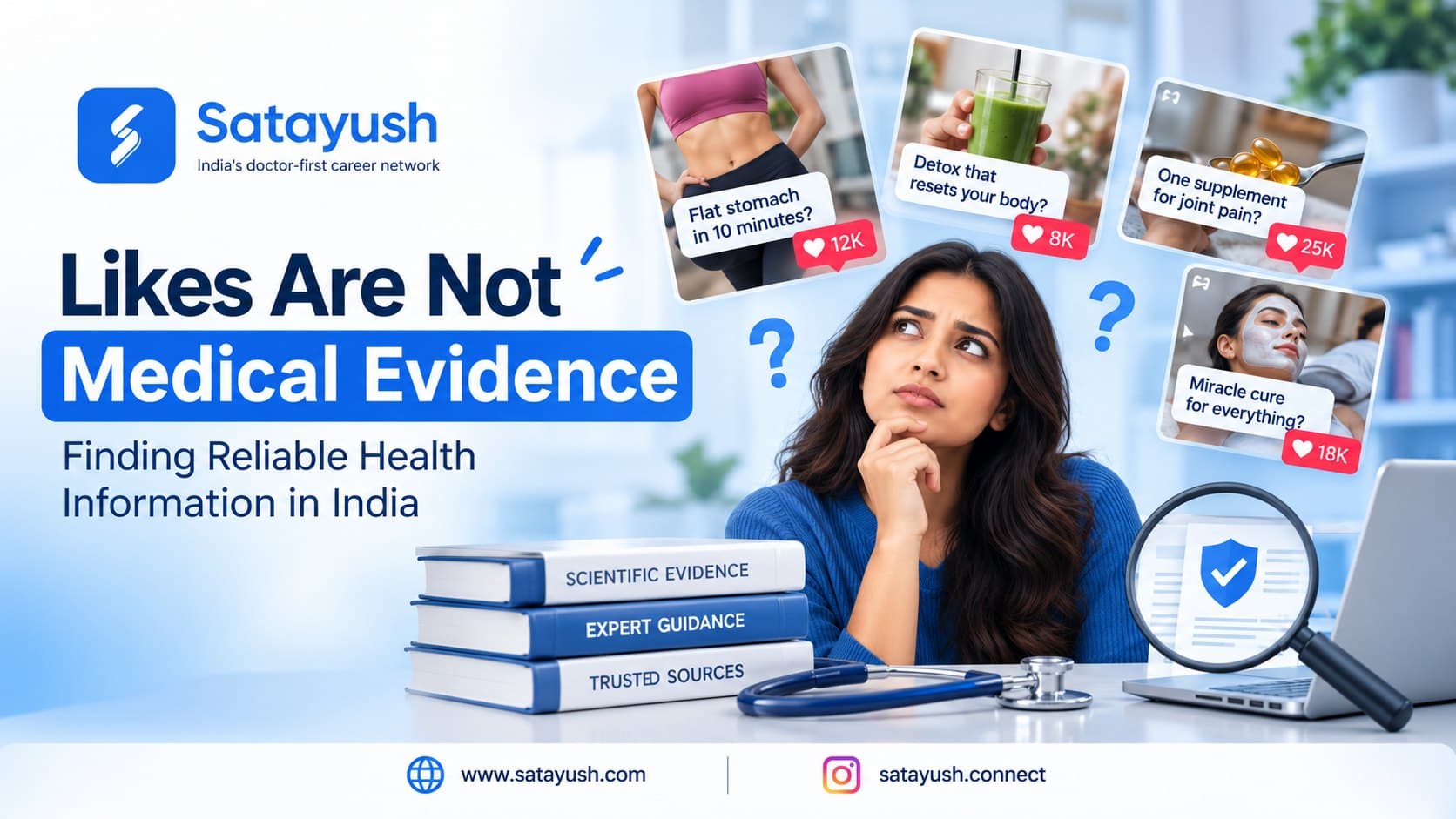
A flat stomach in 10 minutes a day. A detox that “resets” your body. A supplement that ends joint pain. Scroll through Instagram or YouTube and promises like these are everywhere, often with thousands of likes.
Some of the advice behind them is reasonable. Short workouts can support fitness. But no routine can guarantee a flat stomach in a fixed time, because body shape depends on genetics, diet, activity and overall health. The problem is not short workouts. It is promises that make complex health outcomes sound simple and certain.
You do not need to distrust everything you read online. You need a quick way to tell credible advice from claims that only look credible.
Why popular is not the same as proven
Social media has made health information easier to find and share. It has also made misleading claims easier to spread. These are the things that most often make weak advice look trustworthy:
- Popularity. Likes, views and shares show that a post is popular, not that it is accurate.
- Confidence. Quick results, guaranteed cures and effortless fixes make hard health problems sound easy.
- Testimonials. One person’s experience, however sincere, cannot show that something works for everyone.
- Money. The person recommending a product may earn from selling it, and may not say so.
- A scientific look. Medical words, polished graphics and a passing mention of “studies” can dress up a claim the evidence does not support.
Two questions to ask first
- Who is giving this advice? Are they qualified and registered, and can you check that?
- What evidence supports it? Is there research or a recognised guideline behind it, and what does it actually show?
Likes answer neither question. And neither answer is enough on its own: a registered doctor can still be wrong about a particular claim, and a sound study can be quoted out of context. That is why a short routine helps.
The PAUSE checklist
Use these five steps before you trust, share or act on any health claim you see online.
- Pause before sharing or buyingDoes the post use fear, urgency or a miracle promise to make you act right now? That pressure is a warning sign.
- Assess the authorCheck who made it, their qualifications, whether they hold a valid professional registration, and whether they earn from what they recommend.
- Understand the evidenceLook for research or recognised guidelines, what they actually show, and their limits. Testimonials are not evidence.
- Seek independent confirmationCompare the claim with reputable medical or public-health sources, not with other posts repeating the same thing.
- Engage a qualified professionalFor symptoms, diagnosis, treatment, supplements or any change to prescribed medicines, talk to a doctor about your own situation.
PAUSE in action: a worked example
Imagine a reel in which an influencer says: “Doctors won’t tell you this. This herbal powder reverses diabetes in 30 days. Stop your medicines. Only 50 packs left!”
| Step | What to check | What you find |
|---|---|---|
| Pause | Fear, urgency or a miracle promise? | “Only 50 packs left” and “reverses in 30 days” push you to buy now. |
| Assess the author | Name, qualification, registration | A fitness influencer with no listed medical qualification or registration. |
| Understand the evidence | Research, guidelines, limits | No study is named, and testimonials are not evidence. |
| Seek confirmation | Reputable medical sources | Trusted public-health sources do not support reversing diabetes in 30 days. |
| Engage a professional | Your own doctor | Stopping prescribed medicines without medical advice can be dangerous. Ask your doctor first. |
In under a minute, the claim fails every step. Most posts will not fail this clearly, but the same checks work for diet plans, fitness advice, skincare claims and treatment tips.
Where to check in India
To check a doctor
- Indian Medical Register: search the National Medical Commission’s register by name or registration number, for doctors of modern medicine.
- State Medical Council: your state council’s register holds the doctor’s state registration.
- Dentists and AYUSH practitioners: check the relevant national or state council for their field.
- Registration number: it should be easy to find on a doctor’s profile, clinic page or prescription.
If you cannot find a record, check the spelling and the state council before drawing conclusions. And remember that registration shows someone is qualified to practise; it does not prove that every claim they make is right.
To check a claim
- Ministry of Health and Family Welfare, the WHO and the Indian Council of Medical Research (ICMR), for guidelines and public-health advice.
- PubMed and Cochrane reviews, for the research underneath a claim.
- Your own doctor, for anything that concerns your health.
Common red flags
- “Miracle cure”, “100% guaranteed” or “doctors don’t want you to know”
- Testimonials and before-and-after photos offered as proof
- No named author, no source and no way to check
- Pressure to buy now, or advice to stop prescribed medicines
Our standards for health content
In October 2026, the National Medical Commission issued its Guidelines on Ethical Advertising and Public Communication for registered doctors and hospitals, covering social media as well. They bar, for example, promotional patient testimonials, before-and-after photos, and claims such as “best doctor” or “100% success”. Satayush Health holds its content to the same standard:
- Education, not promotion. We explain and inform. We do not run “book now” or “DM to consult” posts.
- Credentials you can check. Every health tip on Satayush Health shows the doctor’s name, qualification and registration number.
- No testimonials. We do not publish patient reviews, success stories or before-and-after content.
- No “best doctor” claims. We avoid superlatives and claims nobody can verify.
- No synthetic doctors or patients. We do not use AI avatars of doctors or AI-generated patient stories.
- Corrections. When evidence or guidelines change, we review our content and fix material errors.
Before you share
At Satayush Health, we believe access to health information should come with the skills to judge it. Before you share, buy or act on a health claim, take a moment to PAUSE: check who is speaking, look at what the evidence shows, confirm it with trusted sources, and speak to a qualified doctor when it concerns your own health.
Likes can tell you a post is popular. Only evidence and qualified expertise can tell you whether it is right.
Want advice you can check? Every health tip on Satayush Health names the doctor who wrote it, with their qualification and registration number.
Read health tips from registered doctorsEditorial note: this article is general information for awareness. It is not a substitute for personal medical advice, diagnosis or treatment. Speak to a qualified doctor about your own health.