
Clinical practice is only one path. This guide helps doctors in India weigh hospital, specialist, research, telemedicine, and health-tech roles before they say yes.
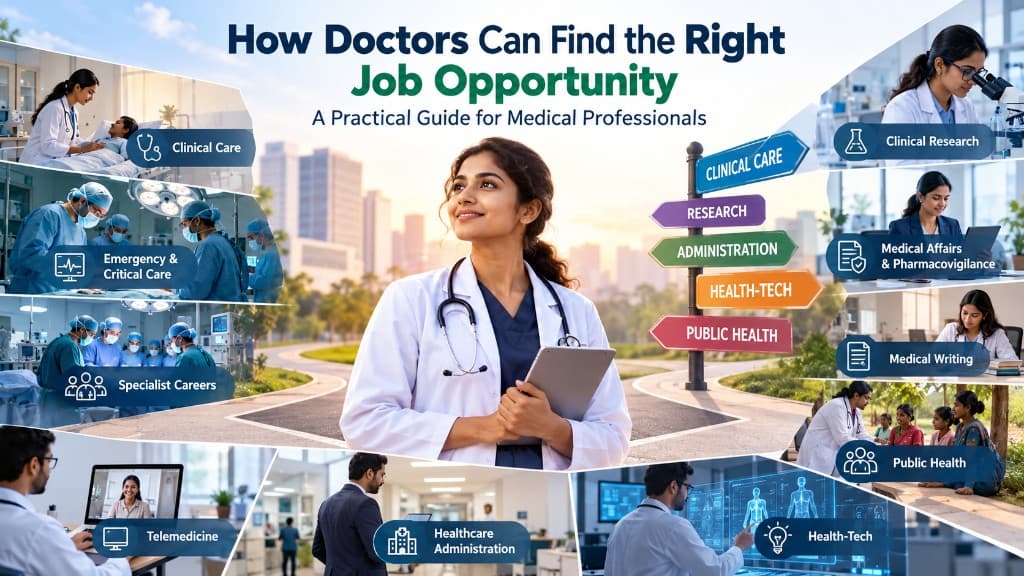
A medical degree in India no longer points to a single kind of job. Hospitals still need duty doctors, RMOs, and specialists. So do research sites, public-health programmes, telemedicine platforms, and health-tech teams that cannot ship a product without a clinician in the room.
The hard part is not discovering that those paths exist. It is choosing one that matches the week you actually want: the patient mix, the roster, the city, and whether you are still building skill or already looking past the ward.
Decide the week you want, not only the job title
Designation and CTC are the easy fields on a listing. They rarely tell you whether the role is supervised learning, unsupervised night cover, or a desk job with a stethoscope in the drawer. Before you compare offers, decide what you are optimizing for over the next one to three years.
- Clinical growth: real OPD, procedures, and senior cover versus repetitive ward paperwork.
- Life logistics: city or district, housing, schooling, a partner’s work, and how often you are on call.
- Format: bedside, remote consults, research, medical affairs, or a mix.
- Time horizon: a two-year skill-building post is a different search from a long-term consultant seat.
Clinical roles most doctors start with
Most first jobs in India still sit in hospitals, nursing homes, and clinic networks. These roles build judgment under load. They also vary wildly in supervision, safety, and whether you are treated as a trainee or as cheap night cover—so read the roster, not only the title.
Medical officer, GP, duty doctor, RMO
MBBS graduates typically enter as medical officers, general physicians, duty doctors, or resident medical officers. The work can be excellent exposure across casualty, wards, and OPD—or a cycle of admissions paperwork with little teaching. Ask who reviews your cases, what the night duty looks like, and whether emergencies are yours alone.
Emergency and critical care
Emergency medicine and ICU posts reward doctors who like rapid decisions and a multidisciplinary floor. They also concentrate risk: violence at the casualty gate, thin senior cover at 2 a.m., and burnout if the unit is chronically short-staffed. Confirm protocols, consultant backup, and how incidents are handled before you sign.
Specialist practice when you have the training
Postgraduate qualifications open consultant and registrar tracks. The specialty is only the first filter. The same degree looks different in a metro corporate hospital, a teaching institute, and a growing district multi-specialty—patient mix, procedure volume, and academic time will not match the brochure unless they are written into the listing.
- Medicine and allied: general medicine, paediatrics, psychiatry, dermatology, pulmonology.
- Women’s health and surgery: obstetrics and gynaecology, general surgery, orthopaedics, urology.
- Diagnostics and peri-op: radiology, anaesthesiology.
- Super-specialty seats: cardiology, oncology, neurology, nephrology, gastroenterology—when the unit actually has the volume to match the title.
If you are comparing specialist jobs, ask about OT or cath-lab time, OP numbers, who holds the emergency roster, and whether the hospital expects you to build a private practice on the side.
Non-clinical paths that still need a doctor
Leaving the ward is not leaving medicine. Clinical research, medical affairs, pharmacovigilance, medical writing, and public health all hire doctors because the work still turns on clinical judgment—protocol, safety, evidence, and population risk.
- Clinical research: investigator, research physician, or CRA work on trials—site quality and ethics matter as much as the molecule.
- Medical affairs: scientific engagement with clinicians; typical titles run from associate to medical advisor and medical director.
- Pharmacovigilance and drug safety: adverse-event assessment, signal review, and risk management for medicines used in India.
- Medical writing: papers, clinical and regulatory documents, and patient-facing education that has to stay accurate.
- Public health: epidemiology, surveillance, maternal and child health, and programme roles in government, NGOs, and research institutes.
Telemedicine, hospital leadership, and health-tech
Newer formats are real jobs, not conference slides. They still need the same scrutiny as a ward post: who the patient is, who carries liability, and what the week looks like when volume spikes.
Telemedicine
Remote consults can add flexibility—follow-ups, second opinions, access for patients who would otherwise travel. Confirm registration and prescribing rules for the states you will serve, how emergencies escalate, and whether the platform treats you as a clinician or as a throughput target.
Healthcare administration
Doctors who like systems move into hospital administration, clinical operations, quality, and patient safety. The work is leadership: rosters, incidents, NABH-style process, and protecting clinical time for the people still on the floor.
Health-tech
Digital health companies hire doctors for clinical product, validation, medical content, and marketplace design. The useful test is whether you still shape patient-facing decisions—or only decorate a pitch deck.
What to check before you accept
Once the path is clear, screen the offer the way you would screen a protocol: matching fields first, then the operational ones hospitals often skip.
- Registration and qualifications: the role should match your degree, specialty, and where you are licensed to practise.
- Experience versus unsupervised duty: “RMO” can mean mentored rotations or nights alone with a phone number that does not answer.
- Responsibilities: OP/IP split, procedures, admin load, and who you report to.
- Hours and call: shift length, weekend frequency, and whether post-call rest is real.
- Location: city versus district, relocation, remote days, housing, and family logistics.
- Growth: teaching, CME, a pathway to consultant or a dead-end roster.
- Pay and benefits: salary, incentives, leave, indemnity or insurance, and whether accommodation is a line item or a rumour.
Satayush is built so hospitals, clinics, healthcare organisations, and medical placement agencies can put that context in the listing—not only a title and a city—so doctors can compare roles without guessing.
Know which path you want? Browse doctor jobs on Satayush, or post a structured opening if you hire for a hospital or clinic.
Browse doctor jobs