
AI, telehealth, and EMRs are moving from conference slides into Indian hospitals—but unevenly. Here is what is already working for clinicians, where the gap still hurts, and what to look for when you choose where to practice.
India’s healthcare system is under pressure from rising chronic disease, urban demand, and thin staffing in many districts. Technology is often pitched as the fix. Some of it already helps doctors reclaim hours and reach patients sooner. Much of it still sits behind cost, connectivity, and trust barriers—especially outside large private networks.
This piece is for clinicians who want a clear picture: what is live in India today, why adoption still feels slow on the ward, and how digital maturity should factor into the jobs you consider.
What is already working on the ground
- Documentation AI in large networks (for example Apollo) is cutting discharge and note burden—clinicians report reclaiming roughly 2–3 hours a day when workflows stick.
- Diabetic retinopathy screening tools such as AIDRSS have been validated across centres and are realistic for rural outreach where ophthalmologists are scarce.
- Chest X-ray pathology models are speeding triage and easing radiologist load on high-volume lists.
- Telehealth via platforms like eSanjeevani connects urban clinicians to patients who would otherwise travel hours for a consult.
Private partner networks also report high EMR use in selected hospital groups. That progress is real—and still far from universal across India’s facility mix.
Why most doctors still feel behind
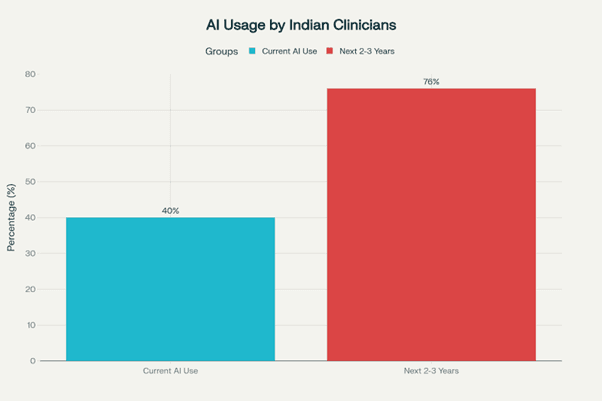
- Only about 12% of clinicians in India use AI tools in direct decision-making today, even though trust in the idea of AI is much higher.
- Rural PHCs and CHCs lag on digital records; eHealth adoption in places like Kerala CHCs has been reported near the low teens.
- Small hospitals and clinics often lack a robust EMR, reliable broadband, or budget for validated tools.
- Privacy, liability, and “will this model work on Indian data?” remain fair clinical concerns—not just IT resistance.
Surveys show a steep expected rise in day-to-day AI use over the next few years. Expectation is not the same as a working workstation on your next shift.
Where digital health is gaining speed
Telehealth
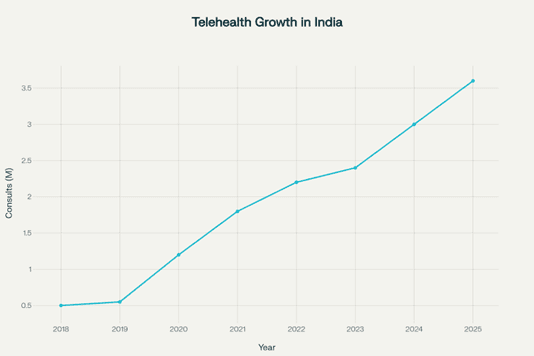
Consult volumes grew sharply after COVID, from a low base in 2018 toward multi-million annual consultations by the mid-2020s. Growth is still skewed urban. For doctors, telehealth is both a patient-access tool and—when structured well—a flexible practice format.
Trust versus routine use
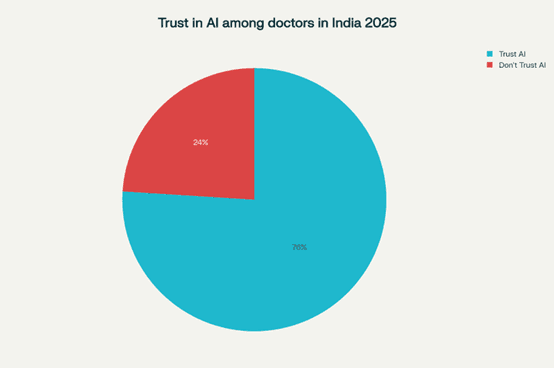
Many doctors say they trust AI to improve outcomes; far fewer use it every day. The gap between attitude and practice is the real story—and it will close only where tools are validated, integrated, and taught.
The applications that matter most for clinicians
- Imaging and diagnostics: fracture, tumour, ECG, and dermatology support that shortens wait for a second look.
- Documentation and triage: less keyboard time, faster discharge summaries, clearer handoffs.
- Prevention and population signals: risk flags from records and wearables when data quality is good enough.
- Access: chatbots and tele-triage as first contact in shortage geographies—useful when escalations to a doctor are clear.
Flashier layers—robotics, immersive training, experimental therapeutics—matter, but they are not the daily bottleneck for most MBBS and specialist roles in India right now. Workflow, records, and connectivity come first.
Infrastructure still decides who benefits
Fully implemented EHR systems remain the minority of hospitals. Ayushman Bharat Digital Mission and ABHA IDs aim to stitch identity and records together, but local implementation quality still varies by state and facility type.
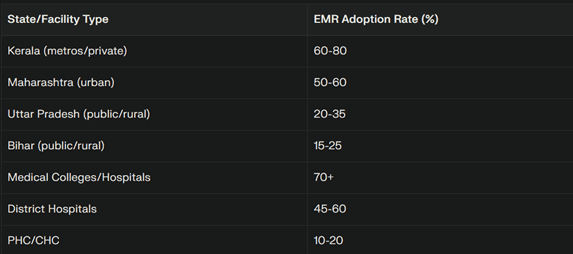
- Doctor density pressure (around 1 per 1,500 people in many estimates) makes remote consults and screening AI more valuable—if the pipe works.
- Wearables and remote monitoring help chronic care when patients and clinics can act on the alerts.
- Without power, bandwidth, and interoperable records, even excellent models stall at the last mile.
Risks doctors should not ignore
Most medical AI is still trained heavily on non-Indian datasets. Dermatology tools can underperform on darker skin tones; epidemiology and drug-response patterns may not transfer cleanly. India needs local validation, clear liability rules, and privacy protection—not just more dashboards.
- Rural infrastructure and intermittent connectivity
- Fragmented records that do not talk to each other
- Cost barriers for smaller hospitals and clinics
- Thin training for practicing clinicians after graduation
What this means when you choose a workplace
- Ask whether AI tools are live on your service—or only in a pilot deck.
- Check EMR depth: notes, orders, imaging, and handoffs—not a login screen.
- For Tier-2 and Tier-3 roles, confirm connectivity, tele-referral paths, and who owns after-hours digital load.
- Prefer employers who train clinicians on new tools instead of dumping them mid-shift.
Satayush listings are built so hospitals can surface that context—roster, systems, and how the week actually runs—so doctors are not guessing from a title and CTC alone.
Looking for a role where the tools and roster are clear up front? Browse doctor jobs on Satayush, or post a structured opening if you hire for a hospital or clinic.
Browse doctor jobs