
India’s doctor supply, jobs & salaries (2025) | Satayush
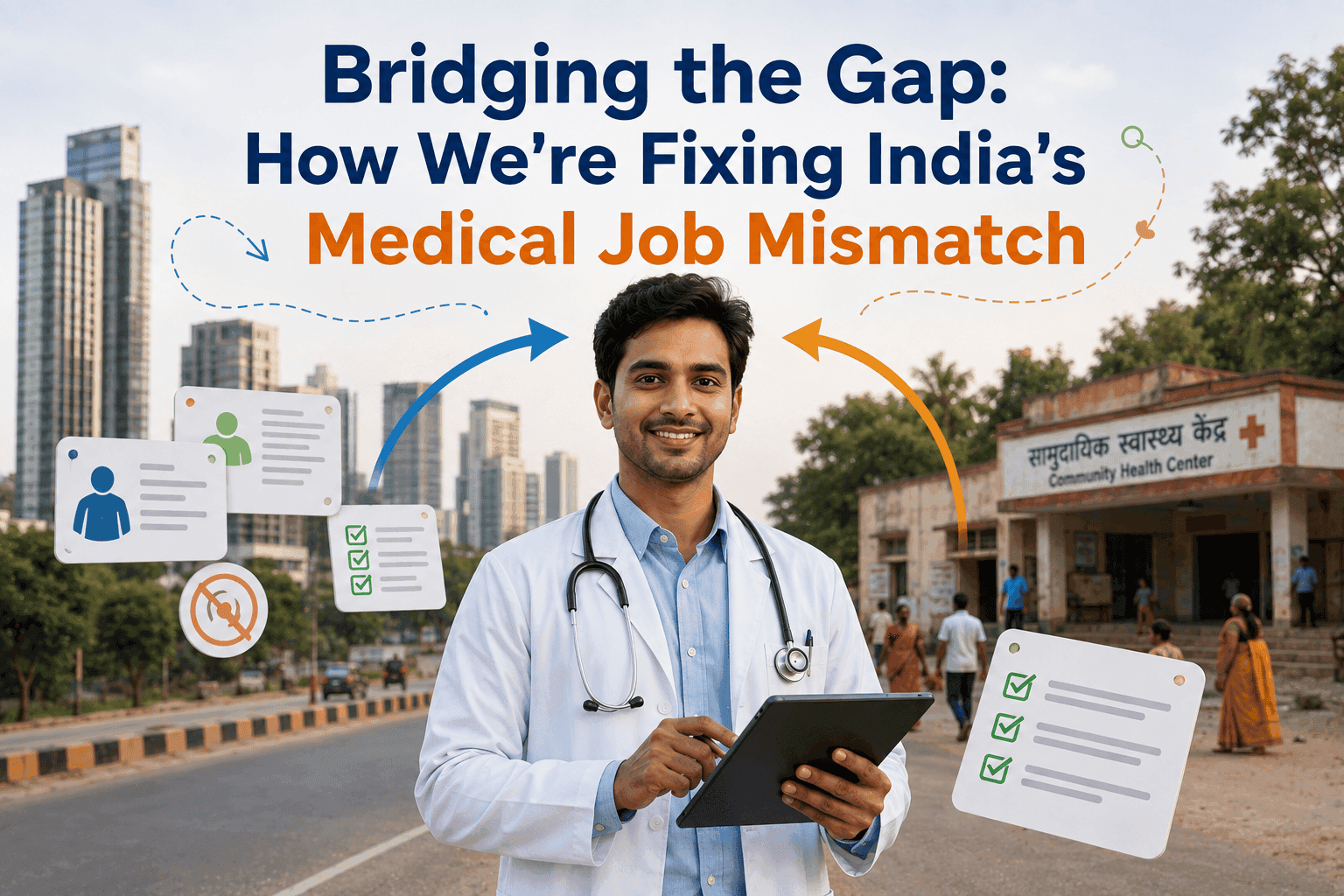
Bridging the Gap: How We’re Fixing India’s Medical Job Mismatch
If you ask a young MBBS graduate in India today, “How’s the job search going?” you’ll often get a tired smile and an answer like: “Plenty of openings online, but nothing that feels right for me.”
India has more medical seats and more hospitals than ever before. Yet doctors are struggling to find jobs that match their skills, while clinics in smaller towns are desperately looking for doctors. Somewhere, the connection is broken.
The numbers tell one story, doctors tell another
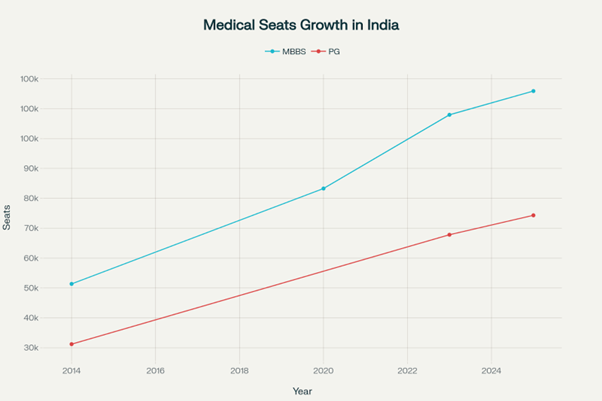
- MBBS seats have grown from about 51,000 in 2014 to 1,15,900 in 2025.
- PG seats have more than doubled too, now at 74,000+.
On paper, this looks like a win. More doctors should mean better healthcare access. But real stories tell a different reality.
“After years of studying, I thought my first job would be exciting. Instead, I spend most days running paperwork for insurance claims.
“We have patients lined up, but we can’t find specialists willing to move here—even though we offer housing and higher pay than many city jobs.
The urban–rural imbalance everyone feels
India’s doctors are heavily concentrated in big cities. About two-thirds of the workforce is urban, while rural India is left with just a third.
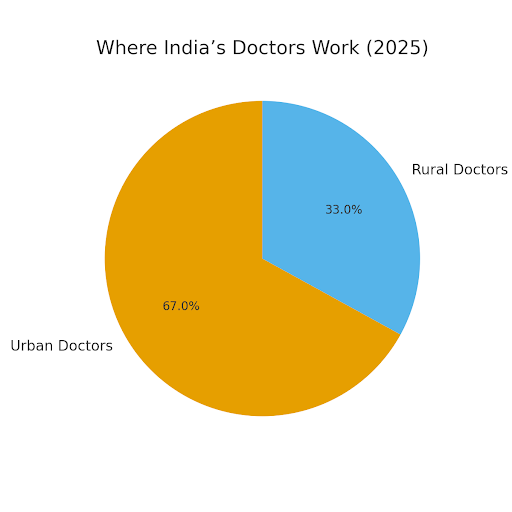
- In metros, young doctors compete fiercely for the same few residency or consultant slots.
- In smaller towns, hospitals stay short-staffed and patients travel long distances.
It’s not about shortage—it’s about distribution.
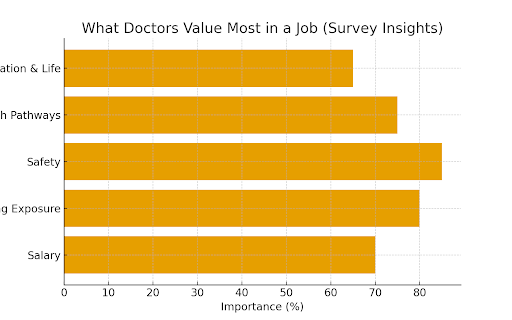
Why jobs don’t feel right even when available
- Learning exposure: OPD procedures vs routine ward rounds
- Safety: Hospital security and violence protocols
- Growth: Academic pathways or dead-end duties
- Life logistics: Housing, schooling, spouse employment
How Many New Doctors Are Graduating Each Year?
- MBBS seats rose from ~51,000 (2014) to 115,900 (2025) — 130% growth.
- PG seats doubled from ~31,000 to 74,000+.
- India expects to add another 8,000 seats in 2025.
Where Do Doctors Work?
- 66–74% doctors serve urban India.
- Less than one-third serve rural areas where 68% population lives.
- Rural density: 3 doctors per 10,000 vs 13 per 10,000 in cities.
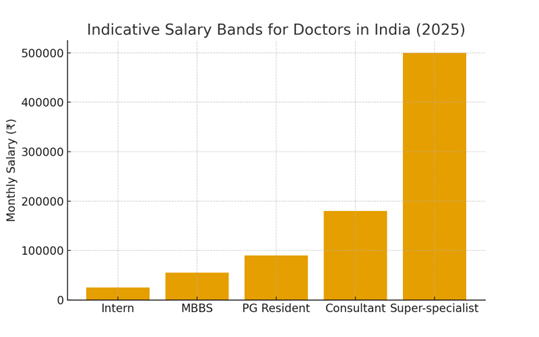
What Do Doctors Earn?
- Intern: ₹20k–30k/month
- MBBS (0–2 yrs): ₹40k–70k/month
- PG resident: ₹60k–1.2L/month
- Consultant (5–10 yrs): ₹1.2L–2.5L+/month
- Super-specialist: ₹3L–10L+/month
What Are the Pain Points?
- Up to 75% report workplace violence.
- PG competition remains fierce.
- Urban jobs oversubscribed; rural jobs invisible.
- Administrative overload reduces clinical time.
Our solution: a platform built for doctors, not just “job seekers”
SATAYUSH
That’s why we created Satayush. Unlike generic job boards, we don’t just post openings—we build context around them.
Here’s how it works:
- Hospitals post verified openings with details doctors actually care about: OP/IP load, bed strength, duty roster, safety protocols, stipends, incentives.
- Doctors filter jobs by what really matters: learning exposure, safety, housing, spousal placements, call frequency.
- Local clinics and smaller hospitals get visibility, not just big metros.
- Entrepreneurship is on the table: from revenue-share OPD days to partner-clinic models, doctors can see paths beyond salary jobs.
In short, we make sure when you see a job listing, you already know what your day-to-day life there would feel like.
What this means for you
For doctors:
- No more blind applications—you’ll know if a hospital fits your learning goals and life needs.
- Safer, more transparent opportunities—so you can choose workplaces where you’re valued.
- A chance to explore entrepreneurship, not just employment.
For hospitals:
- Faster hiring with verified, structured listings.
- Better outreach to Tier-2/3 doctors and even returning metros.
- The ability to showcase safety measures and growth pathways—top reasons doctors say yes.
A future where doctors and jobs finally match
- Imagine this: A young MBBS graduate in Pune finds a verified opportunity in a Tier-2 city hospital with strong safety protocols and real OPD exposure.
- A small hospital in Odisha fills its long-empty pediatric slot because the listing showed housing, schooling, and community perks.
- A cardiologist tired of city overload chooses to partner with a new clinic in a growing district, building their own OPD from scratch.
- That’s not just jobs being filled—that’s India’s healthcare distribution slowly correcting itself.
And that’s why we exist: to make sure doctors find not just any job, but the right one—for their skills, their safety, and their future.
Why India’s Medical Job Market Needs Satayush
Generic job boards aren’t built for medicine. The missing pieces include:
- Compliance tagging: MCI/NMC, NEET-PG/SS, bond status, state council—structured and searchable.
- Real perks: Housing, spouse placement, rural incentives, safety protocols.
- Entrepreneurship pathways: Co-ownership, franchise, greenfield, OPD revenue-share opportunities alongside classic job roles.
- Transparent reviews: Growth tracks, shift rosters, mentorship, research time, insurance.
Doctors can finally filter by learning exposure, safety, and location logistics—not just CTC. Hospitals get verified, structured listings with targeted reach.
Key Takeaway: Connecting India’s Doctors to Real-World Opportunities
Satayush will bridge the gap between expanding medical education and meaningful employment—especially where India needs doctors most.
Whether you’re seeking rapid progression in Tier 2/3, safety in a structured hospital, or the chance to start your own clinic, Satayush makes all options visible, verified, and local.
As India’s doctor pipeline grows, it's time for smart, transparent, and truly medical-first hiring.
Previous Post